
India Takes a Major Step Forward — Childhood Cancer Registry in the Works | 75,000 Kids Diagnosed Every Year
-
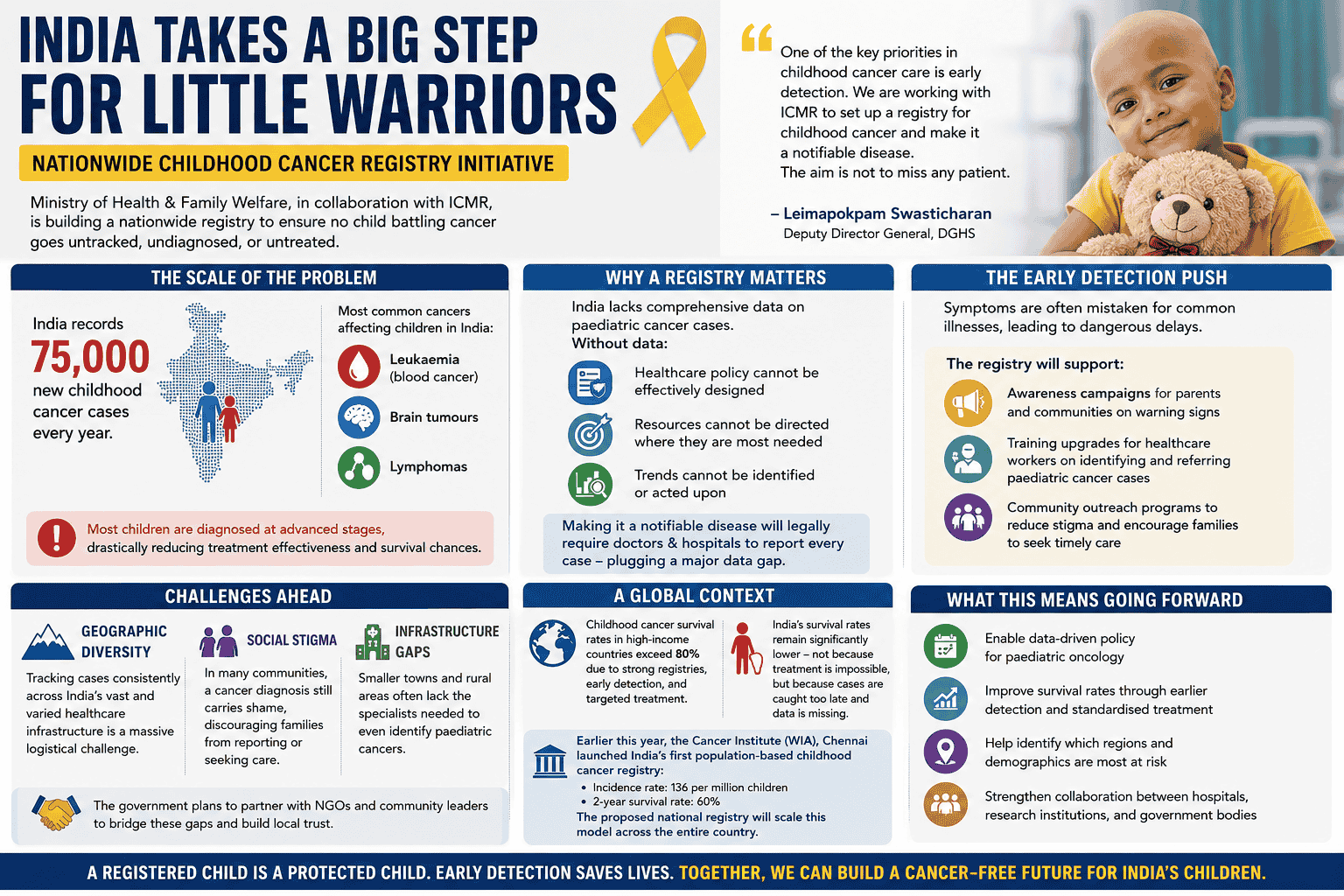
The Big News
India's Union Ministry of Health and Family Welfare, in collaboration with the Indian Council of Medical Research (ICMR), is working to establish a dedicated nationwide Childhood Cancer Registry. The goal is to ensure no child battling cancer goes untracked, undiagnosed, or untreated.
As stated by Leimapokpam Swasticharan, Deputy Director General of the Directorate General of Health Services (DGHS): "One of the key priorities in childhood cancer care is early detection. Setting up a registry for childhood cancer and declaring it a notifiable disease is an issue. We are still working with ICMR on this. The aim is not to miss any patient." ThehonanewsThe Scale of the Problem
This initiative comes against a deeply worrying backdrop. India currently records around 75,000 new childhood cancer cases every year — a number that underscores a serious public health challenge that has long been under the radar.
The most common cancers affecting children in India include:Leukaemia (blood cancer)
Brain tumours
LymphomasA major problem is that most children are diagnosed only at advanced stages, which drastically reduces treatment effectiveness and survival chances.
Why a Registry Matters
Right now, India lacks comprehensive, reliable data on paediatric cancer cases at a national level. Without this data:Healthcare policy cannot be effectively designed
Resources cannot be directed where they are most needed
Trends cannot be identified or acted uponThe initiative aims to improve early detection, ensure comprehensive reporting, and potentially make childhood cancer a notifiable disease — addressing significant gaps in diagnosis across the country. PNI
Making it a notifiable disease would legally require doctors and hospitals to report every case to the government, plugging a major data gap that currently allows thousands of cases to slip through the cracks.The Early Detection Push
One of the most critical goals of this initiative is improving early diagnosis. Childhood cancer symptoms — fatigue, unexplained weight loss, persistent fever, unusual lumps — are often mistaken for common illnesses, leading to dangerous delays.
The registry is expected to support:Awareness campaigns for parents and communities on warning signs
Training upgrades for healthcare workers on identifying and referring paediatric cancer cases
Community outreach programs to reduce stigma and encourage families to seek timely careChallenges Ahead
This is not going to be easy. Key hurdles include:Geographic diversity — Tracking cases consistently across India's vast and varied healthcare infrastructure is a massive logistical challenge
Social stigma — In many communities, a cancer diagnosis still carries shame, discouraging families from reporting or seeking care
Infrastructure gaps — Smaller towns and rural areas often lack the specialists needed to even identify paediatric cancersThe government's plan includes partnering with NGOs and community leaders to bridge these gaps and build local trust.
A Global Context
Internationally, childhood cancer survival rates in high-income countries exceed 80%, largely due to strong cancer registries, early detection systems, and targeted treatment protocols. India's survival rates remain significantly lower — not because treatment is impossible, but because cases are caught too late and data to guide policy is missing.
A first step was already taken earlier this year when the Cancer Institute (WIA) in Chennai launched India's first dedicated population-based childhood cancer registry, recording an incidence rate of 136 per million children in the Greater Chennai zone, with a 2-year survival rate of 60% for all registered patients. The proposed national registry would scale this model across the entire country. whoWhat This Means Going Forward
If implemented effectively, the Childhood Cancer Registry could:Enable data-driven policy for paediatric oncology
Improve survival rates through earlier detection and standardised treatment
Help identify which regions and demographics are most at risk
Strengthen collaboration between hospitals, research institutions, and government bodiesYour Thoughts?
This is a policy that could genuinely save tens of thousands of young lives. But the success will depend entirely on execution — adequate funding, inter-state coordination, and community trust.
Do you think making childhood cancer a notifiable disease is the right approach? Should India look at existing international models like those in the UK or USA? Share your thoughts below.Sources: Ministry of Health & Family Welfare (India), ICMR, DGHS, IARC
-
 A Admin IMA Hub moved this topic from General Discussion on