2 Maharashtra IMA HBI
Maharashtra hospital owner groups.
-
The Future Challenges of Hospitals in India Key Issues Highlighted at the IMA-HBI Conference
IMA HBI Leaders VoicesHealthcare in India is undergoing rapid transformation. Hospitals today are not only centers of clinical care but also institutions that must navigate complex regulations, legal risks, insurance systems, financial pressures, and technological changes.
The recent conference organized by the Indian Medical Association – Hospital Board of India (IMA-HBI) brought together hospital leaders, administrators, and policy experts to discuss the major challenges that will shape the future of hospitals in India.
The topics covered in the conference reflect the realities hospitals are facing today and the issues that will define the healthcare landscape in the coming decade.
- Standardization of Hospital Billing (BIS Format)
One of the important discussions focused on the uniform billing format proposed by the Bureau of Indian Standards (BIS).
Hospital billing across India currently varies widely, making it difficult for patients, insurers, and regulators to interpret hospital charges.
Why this matters for hospitals
Hospitals may soon be required to adopt standardized billing formats.
Billing transparency will increase scrutiny of hospital pricing.
Insurance claim processing may become more structured.
Future concern
Hospitals will need better financial systems, digital billing software, and compliance with standardized billing frameworks.
- Emergency Triage and Patient Prioritization
Emergency departments are the most legally sensitive areas in hospitals. Triage systems help medical teams prioritize patients based on the severity of their condition.
Key challenges
Overcrowded emergency departments
Lack of trained triage staff
Legal expectations of immediate treatment
Why hospitals must focus on this
Poor triage documentation can lead to medical negligence claims or legal complications.
Hospitals must strengthen emergency protocols, training programs, and documentation systems.
- Expired Drugs and Antimicrobial Resistance (AMR)
Medication safety and antibiotic misuse are growing global healthcare concerns.
Expired Drugs
Hospitals must ensure strict inventory monitoring and safe disposal of expired medicines. Using expired drugs can lead to legal liability and patient safety risks.
Antimicrobial Resistance
Overuse of antibiotics in hospitals contributes to drug-resistant infections.
Why this matters
Hospitals will increasingly be required to implement antibiotic stewardship programs and pharmacy audits to control antimicrobial resistance.
- PCPNDT and POCSO Compliance
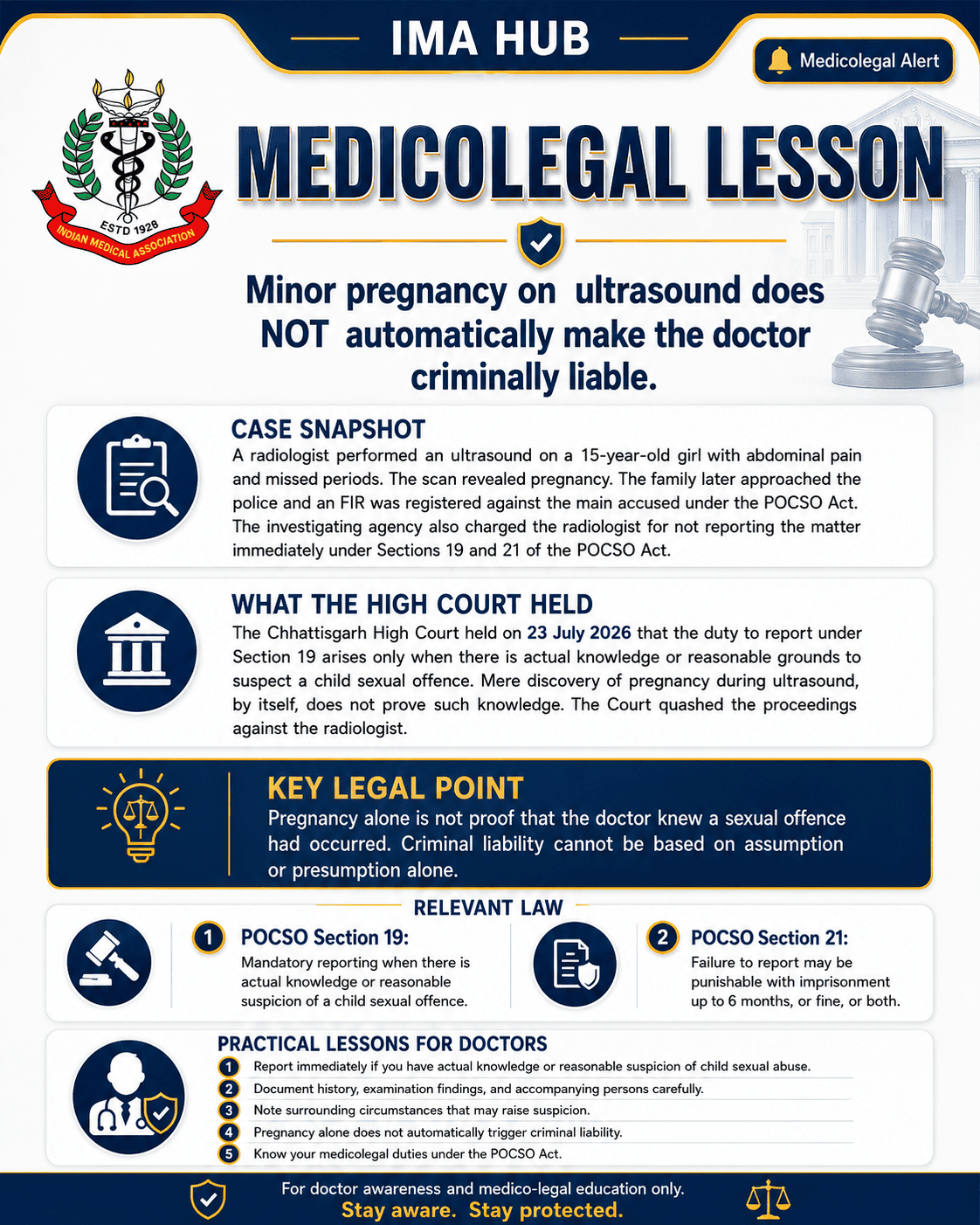
Hospitals must comply with strict legal frameworks related to prenatal diagnostics and protection of minors.
PCPNDT Act
The Pre-Conception and Pre-Natal Diagnostic Techniques Act regulates ultrasound and prenatal diagnostic services to prevent sex determination.
Hospitals must maintain:
Proper Form-F documentation
Machine registration
Regular record maintenance
POCSO Protocol
The Protection of Children from Sexual Offences Act requires hospitals to follow strict medico-legal procedures while treating minors involved in sexual offences.
Future concern
Failure to comply can result in criminal cases, suspension of licenses, or sealing of equipment.
- The Medico-Legal Triangle
The medico-legal triangle represents the interaction between:
Doctors
Patients
Legal system
With rising awareness and legal activism, hospitals face increasing medico-legal scrutiny.
Key risk areas
Informed consent
Medical documentation
Communication with families
Treatment outcomes
Hospitals must develop strong medico-legal policies and documentation practices.
- Consumer Protection Act and Medical Litigation
Medical services in India fall under consumer protection law, allowing patients to file cases for alleged negligence.
Key concerns
Rising compensation claims
Legal harassment of doctors
Defensive medical practices
Hospitals must strengthen legal awareness, patient communication, and risk management systems.
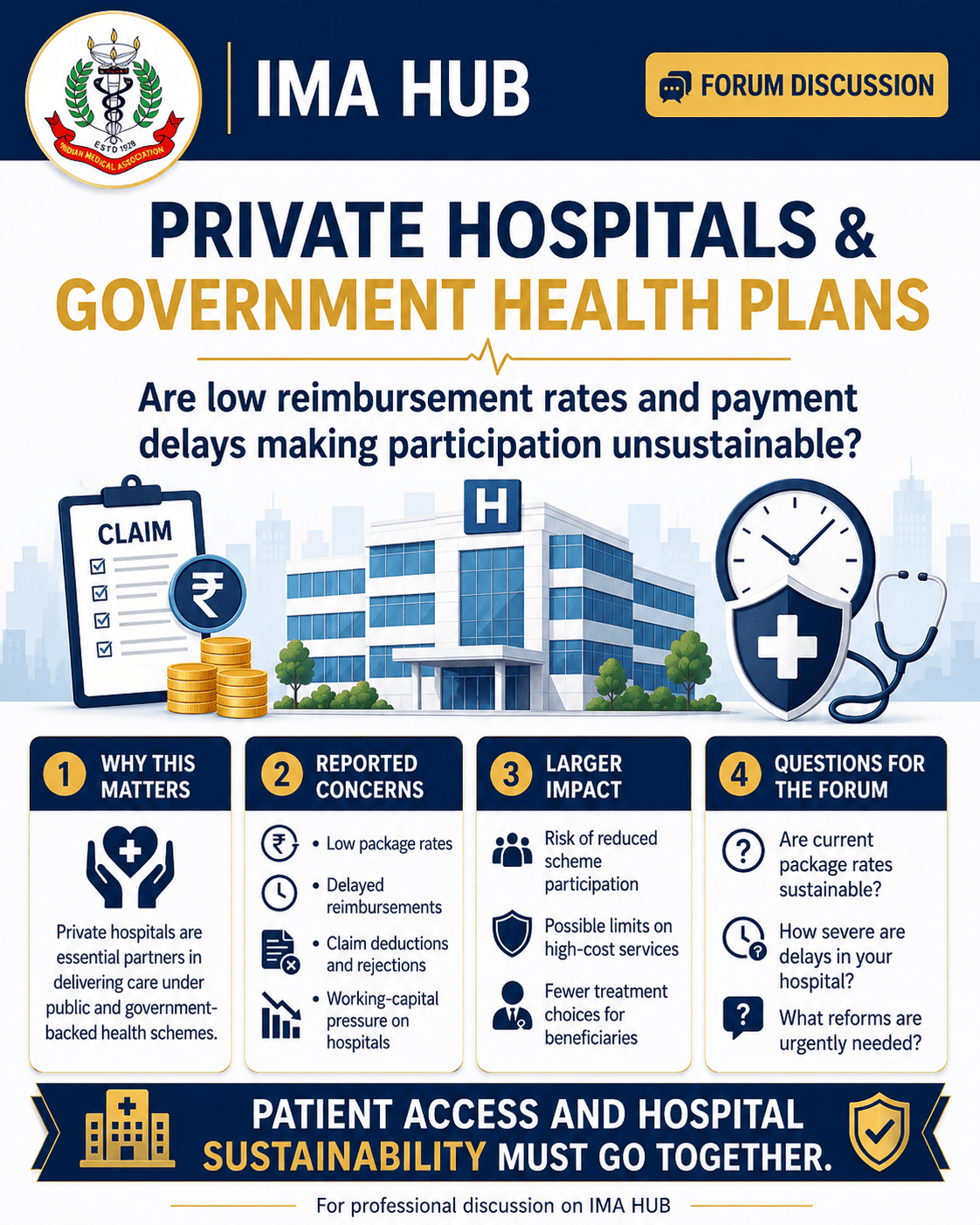
- Health Insurance Challenges
Insurance systems play a major role in modern healthcare but also create operational challenges.
Key issues faced by hospitals
Low package rates
Delayed claim payments
Claim deductions
TPA administrative burdens
Future concern
Without reforms, hospitals may struggle to maintain financial sustainability while providing quality care.
- Clinical Establishments Act (CEA)
The Clinical Establishments Act aims to standardize healthcare infrastructure and services.
Compliance requirements
Hospital registration
Infrastructure standards
Staff qualifications
Clinical protocols
Concern for hospitals
Small hospitals may face high compliance costs and administrative burdens.
- Umbrella Policy for Small and Medium Hospitals
Smaller hospitals face higher risk from legal cases, disasters, and financial uncertainties.
Umbrella insurance policies can help by covering:
Medico-legal liability
Fire and disaster risks
Institutional legal protection
This is especially important for tier-2 and tier-3 city hospitals.
- Violence Against Doctors and Hospitals
Violence against healthcare workers has become a serious issue in India.
Hospitals must strengthen:
Security systems
Communication with families
Crisis management protocols
Protection laws and hospital policies are essential to ensure safe working environments for doctors.
- Universal Health Coverage (UHC)
Universal Health Coverage aims to ensure that every citizen has access to affordable healthcare services.
Impact on hospitals
Hospitals will play a major role in delivering care under government schemes.
However, concerns remain about:
Reimbursement rates
Administrative processes
Infrastructure requirements
- Survival of Hospitals in Tier-3 Cities
Hospitals in smaller cities face unique challenges:
Limited patient volume
Low insurance penetration
Lack of specialist doctors
Financial sustainability
Policy support and innovative healthcare models are needed to strengthen rural and semi-urban healthcare infrastructure.
- Technology Adoption and AI in Hospitals
Healthcare is entering a digital era.
Hospitals are increasingly adopting:
Artificial intelligence
Electronic medical records
Telemedicine
Hospital management software
Technology will improve efficiency but also requires investment, training, and cybersecurity measures.
- Medical Entrepreneurship and Healthcare Investment
Healthcare is also becoming an important sector for entrepreneurship and investment.
Foreign direct investment and healthcare startups are reshaping the healthcare ecosystem.
Hospitals must adapt to new business models, digital platforms, and competitive healthcare markets.
Conclusion: Why These Issues Matter for the Future of Hospitals
The topics discussed in the IMA-HBI conference highlight a clear reality:
Running a hospital in the future will require expertise in medicine, management, law, finance, and technology.
Hospitals must prepare for:
Increasing regulatory oversight
Rising medico-legal risks
Changing insurance systems
Technological transformation
Financial sustainability challenges
Platforms like IMA-HBI are essential to bring hospitals together, advocate for policy reforms, and support healthcare institutions in navigating these complex challenges.
The future of healthcare in India will depend on how effectively hospitals address these issues today.

-
Why Every Hospital Owner Should Join the IMA–HBI Network
IMA HBI Leaders VoicesThe healthcare ecosystem in India is evolving rapidly with increasing regulations, insurance challenges, compliance requirements, and administrative complexities. To ensure that hospitals and healthcare institutions have a strong collective voice and structured support, the Indian Medical Association – Hospital Board of India (IMA-HBI) plays a crucial role.
Joining IMA-HBI is not just a membership—it is becoming part of a national platform that represents and protects the interests of hospitals and healthcare institutions across the country.
Representation and Advocacy
IMA-HBI works to represent and safeguard the interests of hospitals and healthcare professionals at national and state levels. The board actively monitors legislation and policies related to hospitals that are being discussed in Parliament or State Legislatures and intervenes when necessary to protect the healthcare sector.
Support for Hospital Compliance and Accreditation
Hospitals today face increasing compliance requirements in areas such as fire safety, biomedical waste management, insurance regulations, and clinical establishment laws. IMA-HBI assists healthcare institutions in understanding and meeting these regulatory requirements while improving the quality of care through accreditation and structured hospital management practices.
National Conferences and Knowledge Sharing
Members benefit from participation in national summits, conferences, and workshops on critical topics including biomedical waste (BMW), hospital registration, insurance policies, fire safety, and hospital administration. These forums provide opportunities for learning, collaboration, and networking with experts across the country.
Education and Training Opportunities
IMA-HBI supports professional growth by offering courses in hospital administration, digital health, and healthcare management. In addition, monthly HBI Connect sessions bring experts together to discuss legal, insurance, and regulatory issues affecting hospitals.
Addressing Insurance and Package Rate Issues
Insurance-related concerns—particularly package rates and claim settlements—are among the biggest challenges hospitals face. IMA-HBI actively works to resolve these issues and represents hospitals in discussions with insurance stakeholders.
National Legal Advocacy
The board continues to pursue important legal matters, including issues related to standardization of hospital charges, ensuring that hospitals receive fair and transparent treatment within the healthcare ecosystem.
Practical Support for Hospitals
IMA-HBI also focuses on real operational issues such as:
Minimum wages and workforce policies
Patient safety protocols
Fire safety compliance
Biomedical waste regulations
Documentation and staff training
To support members more efficiently, the board has introduced a Hospital Helpline initiative to address institutional issues quickly and effectively.
A Stronger Voice Through Unity
When hospitals stand together through organizations like IMA-HBI, the healthcare sector gains a stronger voice in policy discussions, regulatory frameworks, and national healthcare reforms.
For hospital owners, administrators, and healthcare leaders, joining IMA-HBI is an opportunity to collaborate, learn, influence policy, and strengthen the future of healthcare in India.

-
Social Media Misreads Supreme Court Observation on DAMA — IMA-HBI Leaders Forum Clarifies for Doctors
IMA HBI Leaders Voices@EditorialTeam
Key Points Doctors Should Know• The circulating social media messages are misinterpretations of the court observations.
• Doctors cannot be forced to treat against medical judgment or legal protocols.
• Proper documentation and informed consent during DAMA remains the safest practice.
• Hospitals must continue following standard medico-legal documentation procedures. -
Odisha hospital fire: 10 patients dead, 11 staff severely burned at Cuttack Medical College; PM Modi announces ex-gratia
Medico-Legal & Risk ManagementA tragic fire incident at SCB Medical College and Hospital in Cuttack, Odisha early Monday morning has resulted in the death of ten patients and serious burn injuries to eleven hospital staff members who were attempting to rescue patients from the blaze.
Fire Breaks Out in ICU
According to officials, the fire started between 2:30 AM and 3:00 AM in the Trauma Care ICU, where critically ill patients were undergoing treatment. The sudden outbreak led to heavy smoke inside the unit, creating panic among patients, staff, and attendants.
Emergency response teams from the fire department quickly arrived at the hospital and launched firefighting operations. After intense efforts, the flames were brought under control.
Massive Rescue Operation
Amid dense smoke and confusion, a large-scale rescue effort was initiated by fire service personnel, hospital staff, police officials, and patient attendants. Patients admitted to the ICU were evacuated and shifted to other departments within the hospital.
Officials stated that 23 patients were successfully moved to other wards and ICUs during the evacuation process.
Casualties Reported
Providing details of the tragedy, Mohan Charan Majhi, Chief Minister of Odisha, confirmed that seven critically ill patients died while being shifted to other units, while three more succumbed later, taking the death toll to ten.
Eleven staff members reportedly sustained burn injuries while assisting in the rescue of patients.
Government Response
Chief Minister Majhi, accompanied by Health Minister Mukesh Mahaling, visited the hospital following the incident. They reviewed the situation with senior officials and met injured individuals to ensure they were receiving proper medical care.
Preliminary information suggests that the fire may have been triggered by a suspected short circuit, which affected the Trauma Care ICU and nearby wards.
The state government has announced:
₹25 lakh ex-gratia for the families of each deceased victim
A judicial inquiry to investigate the cause of the fire and examine hospital safety systems
Prime Minister Expresses Condolences
Narendra Modi expressed deep sorrow over the tragedy. In a message shared by Prime Minister's Office India, the Prime Minister conveyed condolences to the families who lost their loved ones and wished a speedy recovery for those injured.
He also announced ₹2 lakh compensation from the PM National Relief Fund for the families of the deceased, while ₹50,000 will be provided to those injured.
Safety Review Expected
Authorities are expected to conduct a comprehensive review of fire safety measures and hospital infrastructure following the incident, as the state deals with the aftermath of the tragedy at one of its largest government medical institutions.

-
Social Media Misreads Supreme Court Observation on DAMA — IMA-HBI Leaders Forum Clarifies for Doctors
IMA HBI Leaders VoicesCourt expects even if patient going Discharge AMA we need to guide them for further treatment and prepare and keep medical documents for future presentation especially in case of MLC cases.
-
Social Media Misreads Supreme Court Observation on DAMA — IMA-HBI Leaders Forum Clarifies for Doctors
IMA HBI Leaders VoicesRecent observations by the Supreme Court of India regarding Discharge Against Medical Advice (DAMA/LAMA) have been widely misinterpreted on social media, creating confusion among doctors and hospital administrators.
The issue arose while the Court was hearing a case related to end-of-life care and withdrawal of life support in hospitals. During the hearing, the Court noted a common practice observed in many hospitals: when a patient becomes terminally ill or when treatment is considered medically futile, some hospitals ask families to sign a DAMA/LAMA form instead of following formal legal procedures for withdrawal of life support.
However, the Court did not ban DAMA, nor did it introduce criminal penalties for hospitals using it.
Patients and families continue to have the legal right to leave a hospital against medical advice for various reasons such as transfer to another hospital, financial constraints, or personal choice.
The Court’s observation was a caution against misuse of DAMA, particularly in terminal or end-of-life situations. Hospitals are encouraged to follow appropriate medical and legal frameworks, including transparent communication with families, palliative care discussions, and the end-of-life decision-making framework established in the landmark Common Cause v. Union of India judgment.
Clarification by IMA-HBI Leaders Forum
To address the confusion, the Indian Medical Association – Hospital Board of India (IMA-HBI) Leaders Forum reviewed the issue and clarified the following points for the medical fraternity:
• The viral social media posts are misinterpretations of the Court’s observations.
• DAMA remains a legally valid process when a patient or family chooses to leave the hospital against medical advice.
• Doctors cannot be compelled to continue treatment against medical judgment or legal protocols.
• Proper documentation, informed consent, and medico-legal records remain essential while handling DAMA cases.
• In end-of-life situations, hospitals should follow established legal and ethical frameworks rather than using DAMA as a shortcut.Responsible Medical Practice
The key takeaway from the Court’s observation is that DAMA should be used responsibly, ensuring ethical, patient-centered decision-making and adherence to established legal procedures in sensitive cases such as withdrawal of life support.
The IMA-HBI Leaders Forum has urged doctors and hospital administrators not to panic or spread unverified interpretations of the Court’s remarks.
Doctors are encouraged to rely on accurate legal guidance and proper clinical documentation while handling DAMA situations.

-
NATIONAL HBI CONFERENCE 2026, 28th & 29th March 2026 at Tumkur
Announcements & Community UpdatesIMA Hospital Board of India National Conference organised by IMA Tumkur Branch under the aegis of IMA - KSB.
Date- 28th and 29th March 2026
Venue- Savyasachi Hall SSAHE Tumkur
Location on Maps- https://maps.app.goo.gl/2Z5wyWtb68G4bikA7?g_st=ac

-
Complete Guide to Hospital Licensing and Compliance in India A Practical Step-by-Step Guide for Hospitals and Clinics
Blogs for DoctorpreneursStarting or running a hospital in India involves more than providing medical care. Healthcare institutions must comply with multiple legal, regulatory, safety, and operational requirements issued by central, state, and local authorities.
For many hospital owners, especially those running small and mid-size hospitals or clinics, navigating these regulations can be confusing and time-consuming. Missing a license or failing to renew a permit can lead to penalties, operational interruptions, or legal complications.
Professional bodies such as the Indian Medical Association often emphasize that understanding regulatory requirements is essential for the smooth functioning of healthcare institutions.
This guide explains the key licenses and compliance requirements hospitals and clinics must follow in India, along with practical steps to manage them effectively.
- Clinical Establishment Registration
The first and most important requirement for any hospital or clinic is registration under the Clinical Establishments Act (in states where the Act is implemented).
This registration ensures that the hospital meets minimum standards for infrastructure, facilities, equipment, and staff qualifications.
Practical steps
• Apply through the state health department portal
• Submit infrastructure and facility details
• Provide qualification documents of doctors
• Maintain patient records as requiredOnce approved, the hospital receives a clinical establishment certificate, which must be displayed at the facility.
- Biomedical Waste Management Authorization
Hospitals generate biomedical waste that must be handled safely according to national guidelines.
Healthcare facilities must comply with the Biomedical Waste Management Rules 2016, which regulate the segregation, handling, and disposal of medical waste.
Practical requirements
• Tie up with an authorized biomedical waste disposal agency
• Segregate waste using color-coded bins
• Train staff in proper waste handling
• Maintain biomedical waste records and logsRegular inspections may be conducted by pollution control authorities.
- Fire Safety Certificate
Hospitals must obtain a fire safety clearance from the local fire department to ensure the facility is prepared to handle emergencies.
Requirements typically include
• Fire extinguishers and hydrant systems
• Emergency exit signage
• Smoke detectors and alarm systems
• Regular fire safety drills for staffFire safety certification must be periodically renewed, depending on local regulations.
- Pharmacy License
Hospitals operating an in-house pharmacy must obtain a drug license from the state drug control department.
Key requirements
• Presence of a registered pharmacist
• Proper drug storage conditions
• Separate storage for temperature-sensitive medicines
• Maintaining purchase and sale recordsThe license must be renewed periodically and is subject to inspection.
- Blood Storage License (If Applicable)
Hospitals storing blood for transfusion must obtain approval from regulatory authorities.
This includes:
• maintaining proper refrigeration equipment
• ensuring traceability of blood units
• following safe transfusion protocolsHospitals not authorized for full blood banks may apply for blood storage center approval.
- Pollution Control Board Approval
Hospitals must obtain consent from the state pollution control board to operate legally.
This approval ensures that the facility complies with environmental standards related to:
• biomedical waste disposal
• water discharge management
• pollution prevention measuresHospitals typically need Consent to Establish and Consent to Operate certifications.
- Radiology and Imaging License
Hospitals offering radiology services such as X-ray, CT scan, or ultrasound must comply with radiation safety regulations.
Ultrasound facilities must also follow the provisions of the Pre-Conception and Pre-Natal Diagnostic Techniques (PCPNDT) Act, which regulates prenatal diagnostic procedures.
Compliance requirements include
• equipment registration
• radiation safety measures
• maintaining patient records and registers
• regular reporting to authoritiesFailure to comply with PCPNDT regulations can result in strict penalties.
- Lift and Building Safety Approval
Hospitals operating multi-floor buildings must obtain certification for elevators and building safety.
Authorities may inspect:
• elevator maintenance
• structural safety
• accessibility features for patientsPeriodic inspections ensure patient safety and regulatory compliance.
- Labor Law Compliance
Hospitals are employers and must comply with various labor regulations related to employee welfare.
These include registrations under laws such as:
• Employees' State Insurance (ESI)
• Provident Fund (PF)
• Shops and Establishments ActProper employee documentation and payroll compliance are essential.
- Accreditation (Optional but Recommended)
Many hospitals pursue accreditation from the National Accreditation Board for Hospitals & Healthcare Providers to improve quality and patient safety standards.
While accreditation is not mandatory, it helps hospitals:
• improve clinical processes
• enhance patient safety
• strengthen institutional credibilitySome insurance providers and corporate healthcare programs prefer working with accredited hospitals.
Common Compliance Challenges Faced by Hospitals
Hospital administrators often report practical difficulties such as:
• managing multiple license renewals
• handling inspections from different departments
• maintaining documentation and records
• keeping track of regulatory updatesSmaller hospitals with limited administrative staff may find these responsibilities particularly demanding.
Practical Tips for Managing Hospital Compliance
Maintain a Compliance CalendarCreate a schedule listing all license renewal dates and inspections to avoid last-minute issues.
Assign Compliance Responsibility
Designate a staff member or administrator responsible for monitoring regulatory requirements and documentation.
Conduct Internal Audits
Periodic internal reviews help identify compliance gaps before official inspections occur.
Train Staff Regularly
Many compliance issues arise due to lack of awareness among staff. Regular training improves adherence to regulations.
Final Thoughts
Regulatory compliance is an essential part of operating a hospital or clinic in India. While the number of regulations may seem overwhelming, structured planning and systematic documentation can make the process manageable.
Hospitals that maintain strong compliance systems not only avoid legal risks but also build greater credibility, patient trust, and operational stability.
Discussion for Hospital OwnersWhich compliance requirement is most challenging for your hospital?
• Regulatory documentation
• License renewals
• Inspections from authorities
• Biomedical waste managementSharing experiences can help other hospitals better prepare for regulatory requirements.
-
How Small Hospitals Can Survive Rising Healthcare Costs Practical Strategies for Hospital Owners in Today’s Healthcare Environment
Blogs for DoctorpreneursRunning a small or mid-size hospital today has become increasingly challenging. Over the past few years, hospital owners across India have witnessed a steady rise in operational expenses, while revenues often remain unpredictable due to insurance delays, regulatory changes, and competitive pressure.
For many hospital administrators, the challenge is not just about providing medical care—it is about keeping the hospital financially sustainable while maintaining quality treatment for patients.
Professional bodies such as the Indian Medical Association have frequently highlighted that smaller hospitals face unique operational pressures compared to large corporate healthcare institutions.
Yet despite these challenges, many small hospitals continue to succeed by adopting smart financial management strategies and efficient operational practices.
The Rising Cost Pressure on Small Hospitals
Hospital owners today commonly report increasing expenses in several areas:
• Staff salaries for nurses, technicians, and doctors
• Electricity and utility costs
• Medical equipment purchase and maintenance
• Compliance and licensing expenses
• Biomedical waste management charges
• Digital technology and software implementationAt the same time, hospitals must keep treatment affordable for patients, making cost management even more critical.
Real Challenges Faced by Hospital Owners
- Equipment Costs and Maintenance
Medical technology is essential for modern healthcare, but it also represents a major investment.
A hospital owner in a tier-2 town recently shared that installing a new digital X-ray system required a large upfront investment along with annual maintenance costs. While the technology improved diagnostic capability, recovering the investment takes time when patient volumes fluctuate.
Small hospitals often face difficult decisions between upgrading technology and managing financial risk.
- Insurance Payment Delays
Insurance and cashless treatment have improved access to healthcare, but many hospitals experience delays in claim settlements.
Hospital administrators frequently report situations where payments are delayed for weeks or even months, affecting the hospital’s working capital.
During this time, hospitals must still pay staff salaries, utility bills, and vendor payments, creating financial pressure.
- Staffing Costs
Staff salaries represent one of the largest operational expenses in hospitals.
Recruiting qualified nurses and technicians has become more difficult, and retaining experienced staff often requires competitive compensation and benefits.
For smaller hospitals, balancing fair salaries while maintaining financial stability can be a constant challenge.
- Compliance and Regulatory Expenses
Hospitals must comply with multiple regulatory standards including fire safety, biomedical waste management, clinical documentation, and facility licensing.
Preparing for accreditation from bodies such as the National Accreditation Board for Hospitals & Healthcare Providers also requires investments in infrastructure, training, and quality monitoring systems.
While these standards improve patient safety, they also add to the administrative and financial responsibilities of hospital owners.
Practical Strategies to Manage Rising Costs
Despite these pressures, many hospitals have successfully implemented strategies to improve efficiency and control expenses.
- Optimizing Resource Utilization
Careful planning of hospital resources can significantly reduce unnecessary costs.
Examples include:
• Scheduling diagnostic equipment usage efficiently
• Reducing idle operating theatre time
• Monitoring pharmacy inventory to prevent wastageEven small improvements in operational efficiency can produce significant cost savings over time.
- Strengthening Financial Monitoring
Many hospital administrators now use structured financial tracking systems to monitor expenses more closely.
Tracking key indicators such as:
• departmental revenue
• equipment utilization
• monthly operational costshelps identify areas where expenses can be optimized.
- Smart Vendor Negotiations
Hospitals often work with multiple suppliers for medical equipment, pharmaceuticals, and consumables.
Building long-term relationships with reliable vendors can help hospitals negotiate better pricing, flexible payment terms, and service agreements.
Some hospitals also collaborate with nearby institutions to purchase supplies in bulk, reducing costs.
- Investing in Digital Efficiency
Hospital management software can streamline operations by improving:
• patient registration and billing
• inventory tracking
• medical record management
• reporting and analyticsAlthough digital systems require initial investment, they can reduce administrative workload and improve operational transparency.
- Diversifying Hospital Services
Hospitals that expand services based on community needs often improve financial stability.
For example:
• adding physiotherapy services
• offering preventive health check-up packages
• developing outpatient specialty clinicsThese services can create additional revenue streams while providing value to patients.
The Strength of Small Hospitals
While large corporate hospitals have greater resources, small hospitals often have strong community trust and personalized patient care.
Many patients prefer hospitals where they feel comfortable, where doctors know them personally, and where treatment decisions are communicated clearly.
This trust remains one of the most valuable strengths of small healthcare institutions.
Looking Ahead
The healthcare environment will continue to evolve, and hospital owners must adapt to changing regulations, technological advancements, and patient expectations.
By focusing on efficient operations, financial planning, and quality care, small hospitals can continue to play a vital role in delivering accessible healthcare to communities.
Discussion for Hospital OwnersWhat has been the biggest cost challenge in your hospital recently?
• Staff salaries
• Equipment investments
• Insurance payment delays
• Regulatory compliance costsSharing real experiences and solutions can help fellow hospital leaders navigate similar challenges.
-
Top 10 Challenges Faced by Private Hospitals in India (2026 Guide)
Blogs for DoctorpreneursRunning a hospital today is far more complex than it was even a decade ago. Hospital owners and administrators are expected to deliver high-quality patient care, maintain strict compliance, manage financial sustainability, adopt new technologies, and handle increasing patient expectations—all at the same time.
Private hospitals play a crucial role in India’s healthcare ecosystem, providing a significant portion of medical services across urban, semi-urban, and rural areas. Yet, many hospital owners today feel they are operating under increasing operational pressure and uncertainty.
Professional bodies such as the Indian Medical Association have repeatedly highlighted the growing challenges faced by healthcare institutions, especially small and mid-size hospitals.
This guide explores the 10 biggest challenges private hospitals in India are facing in 2026, based on real operational experiences from hospital administrators and healthcare leaders.
- Increasing Regulatory Pressure
Hospitals today must comply with a wide range of regulatory requirements from multiple authorities. These include licensing regulations, biomedical waste management rules, fire safety certifications, pharmacy licenses, and clinical documentation requirements.
For many hospital owners, the challenge is not only compliance itself but also keeping up with frequent policy updates, inspections, and documentation demands.
Smaller hospitals often struggle with limited administrative staff to manage these complex regulatory responsibilities.
- Insurance Payment Delays and TPA Challenges
One of the most frequently discussed issues among hospital administrators is delayed payments from insurance companies and TPAs.
Hospitals often face problems such as:
Long claim approval timelines
Frequent documentation queries
Partial claim settlements
Claim rejections due to minor discrepancies
While hospitals continue to provide treatment and manage operational costs, delayed reimbursements can significantly affect cash flow and financial stability.
- Staffing Shortages
Hospitals across India are facing a growing shortage of qualified nurses, technicians, and specialist doctors.
This challenge is particularly severe in smaller towns and rural areas where attracting skilled professionals is difficult.
Even when recruitment is successful, retention becomes another challenge due to better opportunities in larger hospitals or overseas.
Staff shortages often lead to:
Increased workload on existing staff
Burnout and fatigue
Difficulty maintaining ideal patient-to-staff ratios
- Rising Operational Costs
Operating a hospital today involves significantly higher expenses compared to previous years.
Major cost pressures include:
Staff salaries
Medical equipment and maintenance
Electricity and utilities
Regulatory compliance costs
Technology investments
Hospitals must balance these expenses while keeping treatment costs affordable for patients, making financial management increasingly complex.
- Medico-Legal Risks
Healthcare today operates in an environment where patient awareness and legal scrutiny are increasing.
Hospitals face growing risks related to:
Treatment outcome disputes
Consent and documentation issues
Communication misunderstandings
Allegations of negligence
Proper documentation, informed consent processes, and transparent communication have become essential to reduce medico-legal exposure.
- Increasing Patient Expectations
Patients today expect not only quality treatment but also hospitality-level service experiences.
They look for:
Short waiting times
Comfortable facilities
Transparent billing
digital access to reports and records
Meeting these expectations requires investments in infrastructure, staff training, and digital systems, which can be challenging for smaller hospitals.
- Technology Adoption Challenges
Digital transformation is reshaping healthcare globally. Hospitals are increasingly expected to adopt systems such as:
Electronic medical records
Hospital management software
telemedicine platforms
digital diagnostics
While these technologies improve efficiency and patient care, implementing them requires financial investment, staff training, and workflow changes.
- Quality and Accreditation Requirements
Many hospitals are now pursuing accreditation from the National Accreditation Board for Hospitals & Healthcare Providers, which promotes standardized quality and patient safety practices.
While accreditation brings credibility and structured processes, it also requires hospitals to invest in:
infrastructure improvements
detailed documentation systems
staff training
quality monitoring programs
For smaller hospitals, balancing these requirements with daily operations can be challenging.
- Competition from Large Corporate Hospitals
Large corporate healthcare chains have expanded rapidly across India.
These institutions often have:
larger infrastructure
advanced technology
strong marketing capabilities
access to greater financial resources
As a result, smaller hospitals may find it difficult to compete in terms of visibility, pricing strategies, and specialist availability.
- Financial Sustainability of Small Hospitals
Many hospital owners are increasingly concerned about the long-term financial sustainability of small and mid-size hospitals.
When regulatory costs, staffing expenses, and operational pressures rise simultaneously, maintaining stable revenue becomes difficult.
Hospitals must continuously explore ways to improve operational efficiency, manage costs, and diversify services to remain sustainable.
The Way Forward
Despite these challenges, private hospitals continue to play an essential role in delivering healthcare across the country. Addressing these issues requires collaboration among hospital owners, healthcare professionals, policymakers, and industry organizations.
Platforms that encourage knowledge sharing, discussion, and collective problem-solving can help hospital leaders learn from each other's experiences and develop practical solutions.
The future of private healthcare will depend on strong leadership, innovation, and collaboration within the healthcare community.
Discussion for Hospital OwnersWhich of these challenges affects your hospital the most today?
Regulatory compliance
Insurance payment delays
Staffing shortages
Rising operational costs
Medico-legal risks
Share your experience and insights with fellow hospital leaders. Your perspective could help others facing similar challenges.